


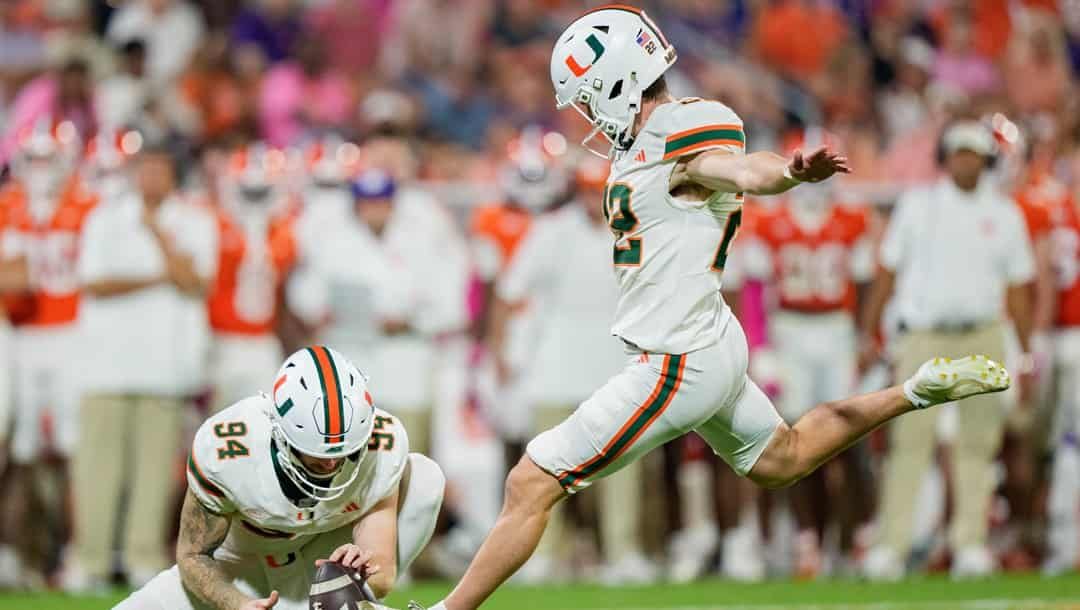
The fair catch kick rule is now a part of college football.
Starting in 2026, the NCAA adopted this little-known rule that already exists in the NFL and other versions of the sport.
While it won’t come up often, the strangeness and confusion of seeing a fair catch kick in a live game is enough to send anyone running to the Google machine.
What Is the Fair Catch Kick Rule in College Football?
A fair catch kick is a field goal attempt directly following a punt or free kick from the other team. It gives teams additional strategic utility during end-of-half and end-of-game scenarios.
Or, put more simply, it helps teams kick field goals in very specific scenarios.
How Does a Fair Catch Kick Work?
Here is the direct language from NCAA Rule 6-5-1-e.
“Following a fair catch, the ball shall be put in play by a snap or a Fair Catch Kick by the receiving team at the spot of the catch.”
To trigger the Fair Catch Kick, a fair catch must be completed off an opponent’s scrimmage kick or free kick. The receiving team may choose to attempt a Fair Catch Kick from the spot of the fair catch or the succeeding spot after penalties.”
When Can a Team Attempt a Fair Catch Kick?
A team can attempt a fair catch kick on the play immediately following a punt or free kick.
Can a Team Attempt a Fair Catch Kick After Time Expires?
Yes, this is one of the added benefits of the fair catch kick rule. If a team makes a fair catch on a qualifying kick or punt, that team is given one untimed down to make a fair catch kick.
This remains the case even if there is no time left in the half.
What Happens if a Fair Catch Kick Is Missed?
Directly from the NCAA rules: “All rules pertaining to scrimmage kicks and the Next Play provisions of an unsuccessful field goal apply.”
If it’s the end of a half, then it’s the end of a half. If for some reason there was still time left on the clock when the missed kick was attempted, possession would change.
The content provided in this blog is intended for entertainment purposes only. All views and opinions expressed are the authors and reflect their individual perspectives on sports, betting, and related topics. This content should not be considered professional betting advice or the official views of BetMGM LLC. Please gamble responsibly. If you or someone you know is experiencing issues related to gambling, seek help from a licensed health professional. This blog is not liable for any losses, damages, or consequences resulting from betting activities.


